
The short answer
Ask who will design, install and program the system, and whether they are certified for the brand they sell. Ask what you get in writing: a design, a quote that lists every part, labels and a record of what was installed. Then ask how support works after the install, and what happens if they close.
Why the installer matters more than the brand
Every serious smart home platform can be wonderful or frustrating. The difference is rarely the equipment. It is the design, the programming and the support behind it. The same controller, keypads and speakers, installed by two different companies, can feel like two different homes.
So the meeting with an installer is really an interview. These are the questions worth asking, and what a good answer sounds like.
About the company
Are you certified, and who on my job is?
Two kinds of certification matter. The company should be an authorized dealer for the platform it recommends: Control4 lists its dealers on its integrator search, and says its dealer tiers mostly reflect how much business a company does with Control4, so a tier is only one indicator. The people should be trained too. CEDIA, the industry association, certifies individuals, not companies, with four credentials: CIT for cabling, IST for installation, RNS for home networks, and ESC-D for system design. Ask which technician on your job holds which, and check company membership in the CEDIA directory.
In Ontario, claiming a certification or accreditation a business does not have is misrepresentation under consumer protection law, so a straight answer to this question matters.
Can I see work like mine?
Ask for photos and videos of their own projects, not brochure images: a finished room, a tidy equipment rack, a job that looks like yours in size and style.
Who will actually be in my home?
Ask whether their own staff design, install and program the system, or whether parts of it go to subcontractors. Either can work, but you should know who is responsible for what.
Are you insured, and can I see it?
Ask for proof of liability insurance, and in Ontario, workplace safety and insurance coverage for the crew. A reputable company shows both without hesitation.
Can I talk to past clients?
Ask for references, including a job finished a year or more ago, because problems often show up long after the install. Reviews on Google help too: look for ones that mention service after the install, not just the day it was finished.
About the design
- Will you visit before you quote? A quote without a visit is a guess. A good installer walks the home and asks how you live.
- What are we solving? Expect questions about your routines, who lives in the house and what annoys you today, before any talk of equipment.
- How does the network fit in? Almost everything in a smart home depends on the WiFi and the wired network. Ask how they plan coverage, including outside.
- Can it grow later? Ask what wiring or capacity they leave for rooms and devices you might add in a few years.
- What are you leaving out, and why? A good designer can explain what you do not need.
About the quote and the agreement
- Does the quote list every part, room by room, and the labour separately?
- What does programming include, and how many rounds of changes?
- How are changes handled once work starts, and are they confirmed in writing first?
- What is the schedule, and who coordinates with my builder, electrician or designer?
- What warranty covers the equipment, and what covers the workmanship? Manufacturer warranties usually exclude labour and installation, so the workmanship warranty belongs in the contract.
Get it all in a written agreement before work starts, and keep a copy. Ontario's guidance says a contract should describe the work and the materials, the warranties, the total cost and payment terms, the schedule, and any sub-trades. Two Ontario rules worth knowing:
- If the estimate is written into the contract, the final price cannot go more than 10 per cent above it unless you agree to new work or a new price in writing.
- If you sign the contract at home, you have a 10 day cooling-off period to cancel for any reason.
And never pay the full amount before the work is done.
What you should get at the end
This is the question most people forget, and it decides how easy your system is to live with for the next ten years.
- The system registered in your name, with your own logins
- A written list of the equipment, with model numbers and where each piece is
- Labels on the equipment and the cables in the rack
- The network details: WiFi names and passwords, and the router's admin access
- A backup of the programming, kept by the installer and available to you
- A walkthrough for everyone in the house, and a short guide for guests and sitters
Why it matters: with the logins, the equipment list and the labels in hand, any certified dealer can look after your system later. Without them, you depend on one company forever. Taking over a house that already has a system? See the first week checklist for a Control4 home.
About support after the install
- Who do I call, and how fast do you answer? Ask whether support has its own line, separate from sales.
- Can you fix things remotely? Many adjustments can be made without a visit when remote access is set up with your permission.
- How is support billed once the warranty ends? Ask for the terms in writing, so there are no surprises.
- What happens if you close, or if I want to switch? A confident installer has a clear answer: you keep the logins, the documentation and the backup.
Red flags
- A firm price without a visit to the home
- A vague "smart home package" instead of a list of parts and rooms
- Reluctance to put the scope and the schedule in writing
- Pressure to replace equipment that already works, before they have tested it
- No photos of their own work
- The system registered to the installer instead of to you
- No clear answer about support after the install
Bring this to the meeting
- Which certification do you hold, and where can I check it?
- Can I see projects like mine that you did yourselves?
- Who designs, installs and programs the system?
- Will you visit and ask how we live before you quote?
- How will the WiFi and the network cover the whole property?
- Does the quote list every part and the labour, room by room?
- How are changes confirmed once work starts?
- Will the system be registered in my name, with my logins?
- What documentation and backup do I get at the end?
- Who do I call for support, and how is it billed after the warranty?
Planning a smart home in Toronto or cottage country?
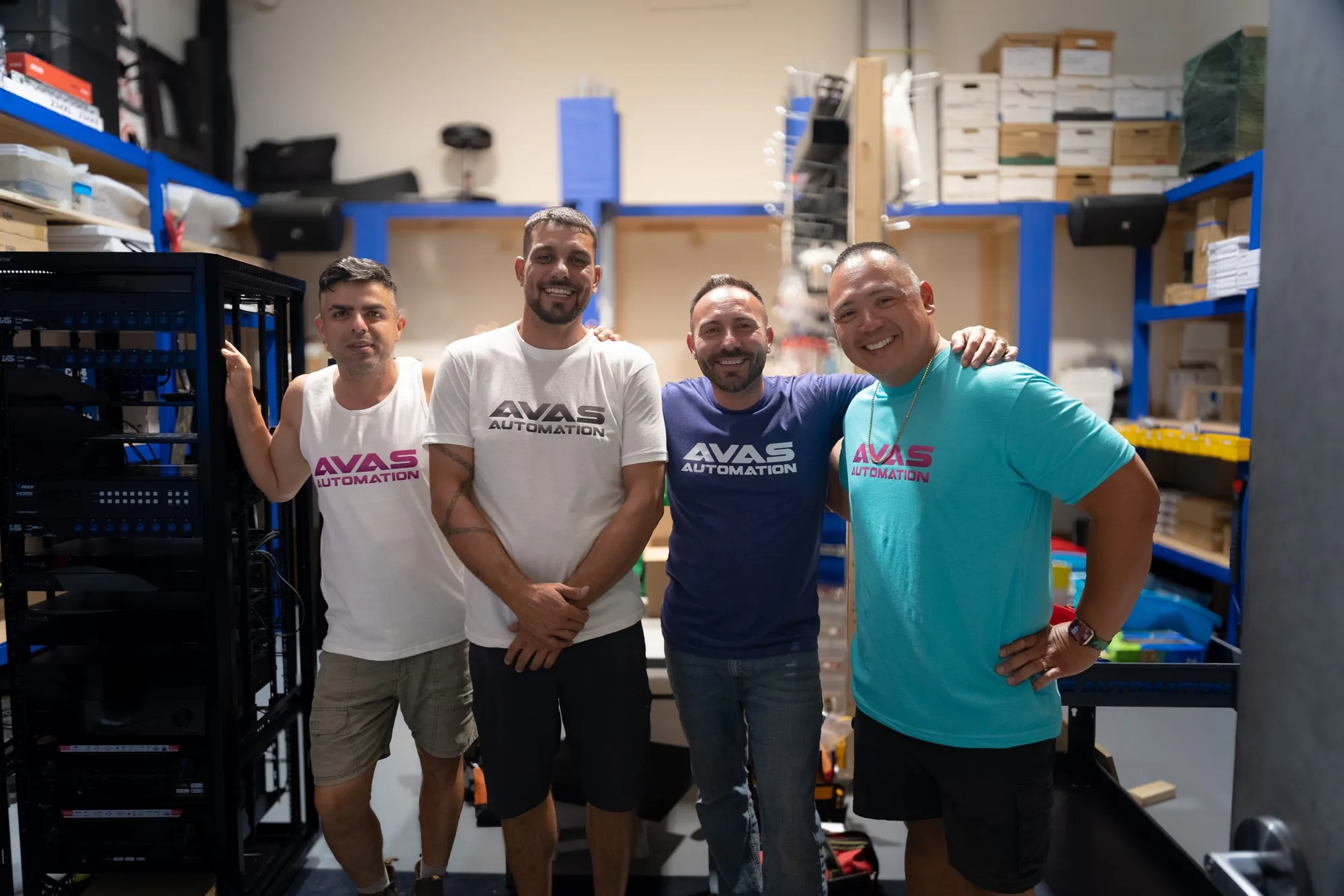
Ask AVAS Automation every question on this list. Meet the team, or read what our clients say.
Common questions
Does the brand of smart home system matter?
It matters less than most people think. Control4, Crestron, Savant and Lutron can all run a great home. What decides how it feels every day is the design, the programming and the support from the installer, so choose the installer first and let them explain the platform they recommend.
Is the lowest quote a red flag?
Not always, but compare what is included. Quotes for the same home can differ because one leaves out programming, the network, labels, documentation or support. Ask each installer to list parts and labour room by room, then compare the same scope side by side before you decide.
How many installers should I talk to?
Two or three is usually enough. Give each the same list of rooms and priorities so the quotes are comparable. Pay attention to the questions they ask you: the installer who asks the most about how you live usually designs the system you will enjoy most.
Can my electrician install the smart home system?
In Ontario, only a Licensed Electrical Contractor can be hired for electrical work, so your electrician handles circuits, outlets and anything at line voltage. The design, low voltage wiring, network and programming are specialist work, so most homes are best served by both trades planning together before the walls close.
Sources
- Ontario: Your rights when starting home renovations or repairs
- Ontario: Door to door sales and home service contracts
- CEDIA: What to ask a smart home installer before they start
- CEDIA: Find a smart home professional
- ESA: Who can do electrical work at my property
- Control4: Find a certified Control4 integrator